
Executive Summary
For over two centuries, Germany has stood as the global benchmark for precision engineering and industrial excellence. Yet in 2026, this legendary nation faces an existential vulnerability: Germany depends on external sources for 94-98% of its rare earth elements, with approximately 98% of EU rare earth imports flowing directly from a single source: China. This is not mere supply chain logistics—this is the crystallization of strategic vulnerability that threatens the very core of German motor manufacturing.
This article examines how Greenland’s lujavrite deposits represent Germany’s pathway to rare earth sovereignty, technical specifications of magnetic engineering, and the strategic framework provided by EU Regulation 2024/1252 (Critical Raw Materials Act). The evidence suggests that lujavrite-based supply chains are Germany’s only viable path to industrial independence.
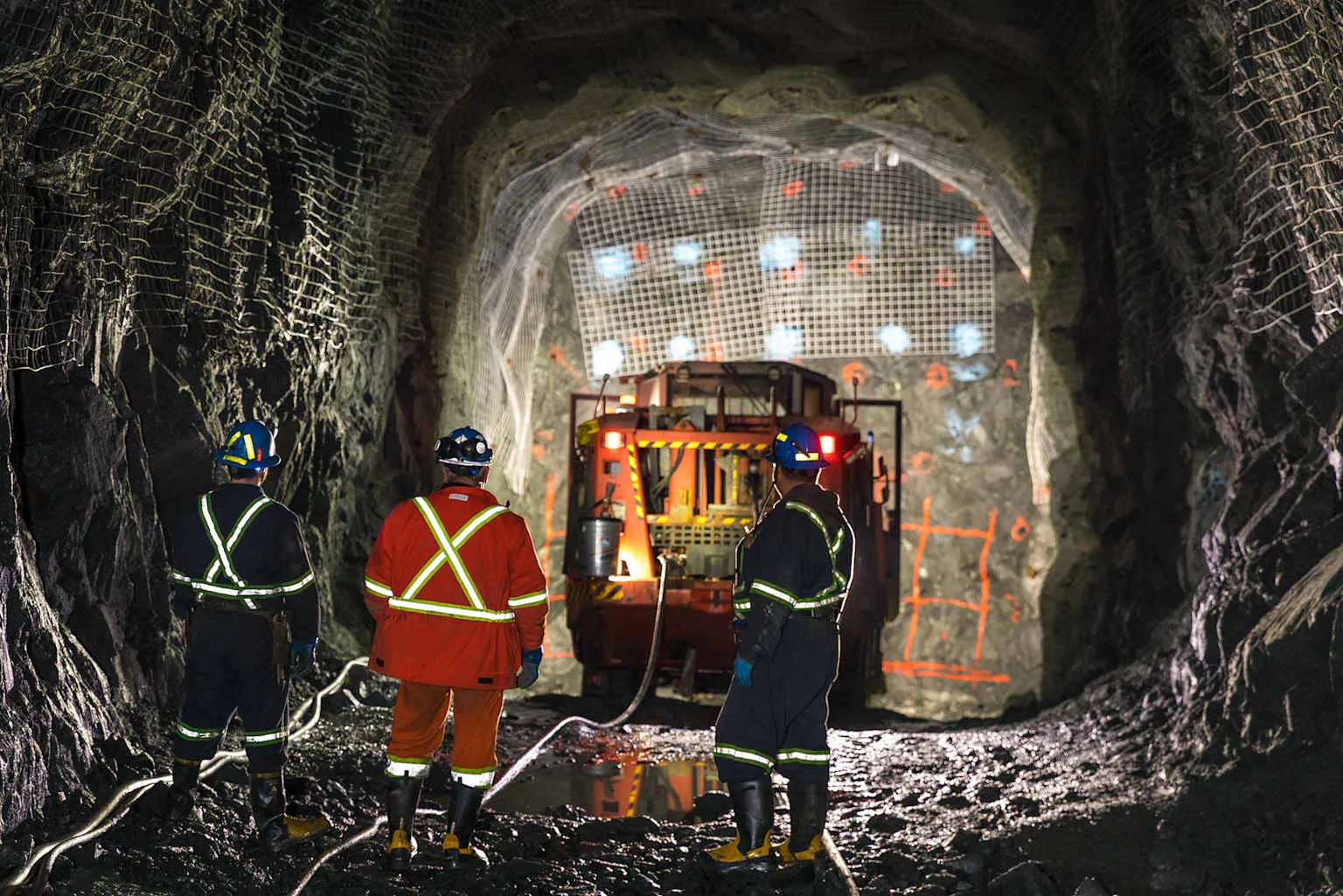 Mining operations in Greenland’s Arctic landscape (Public domain)
Part 1: The Call – Engineering’s Legend and the Desert of Dependency
Germany’s Industrial Soul: The Historical Context
There exists a universal law that Paulo Coelho taught humanity through his philosophies: every person possesses a “personal legend”—a calling written into their very essence. Germany’s industrial soul has always embodied this truth. For over two centuries, from the precision of Prussian craftsmanship to the digital revolution of the Ruhr Valley, the German engineering heartbeat has been the world’s metronome of quality, innovation, and technological sovereignty.
Yet today, this legendary nation finds itself wandering in a desert—not one of sand, but one of silicon, cobalt, and magnetic susceptibility.
The Mathematics of Strategic Vulnerability
The numbers whisper a cautionary tale that echoes through the halls of Stuttgart and Berlin with increasing urgency:
| Dependency Metric | Germany/EU | Source |
|---|---|---|
| Rare Earth Import Dependency | 94-98% | FreightAmigo (2025); Discovery Alert (2025) |
| Imports from China | 98% of EU total | PIE.net (2024) |
| China’s Magnet Production Control | 90% global | Rare Earth Exchanges (2025) |
| China’s Heavy REE Processing | 98% worldwide capacity | Reuters (2025); Goldman Sachs |
When a single nation can write the price of your industrial future on a ledger in Beijing, your legend is no longer personal—it becomes borrowed.
But the universe has a way of sending signals to those courageous enough to listen. Sometimes these signals arrive not as whispers, but as geological stone millions of years old, embedded in Arctic bedrock, waiting to be discovered.
Part 2: The Arctic Revelation – Where Destiny Meets Stone
The Ilímaussaq Complex: Geological Cathedral of Magnetic Destiny
Approximately 175 kilometers northwest of the southern tip of Greenland, within the municipality of Kujalleq, there exists a layered peralkaline intrusive complex of Mesoproterozoic age. This is the Ilímaussaq complex—one of the earth’s most extraordinary repositories of magnetic destiny.
Within this geological cathedral lies a rock formation that holds the key to Germany’s industrial resurrection: (lujavrita).
Lujavrita: The Mother Rock
The word itself carries the weight of ancient Norse geology. Lujavrita is not a common stone. It is an agpaitic variety of nepheline syenite—a dark, fine-grained rock that appears unremarkable to the untrained eye but contains within its crystalline matrix the rarest treasures of the periodic table.
This (lujavrita) is the mother rock, the geological alchemy furnace where neodymium, dysprosium, terbium, and other critical rare earth elements concentrate in mineral forms: steenstrupine and eudialyte.
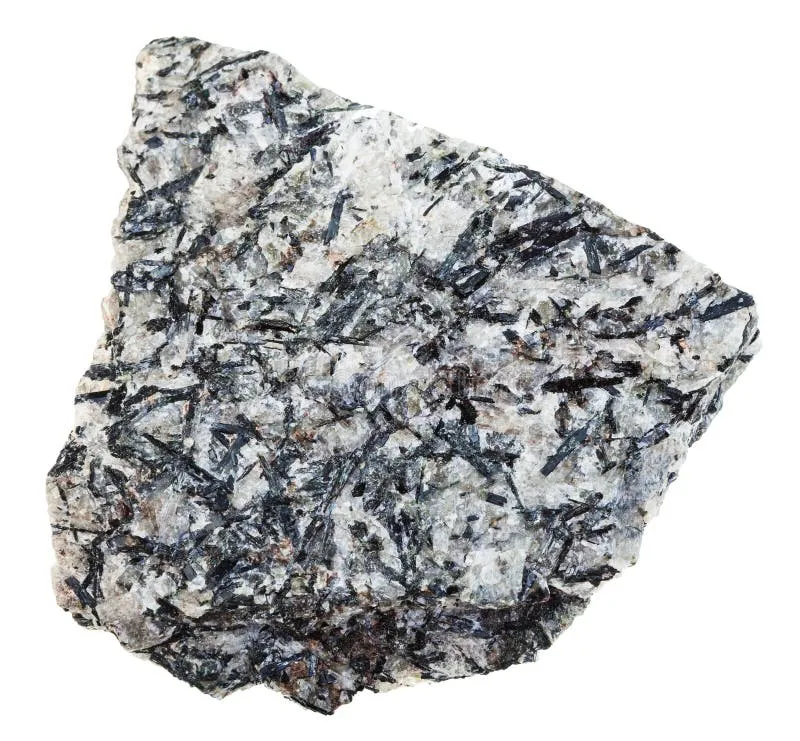 Lujavrite specimen from the Ilímaussaq complex; contains eudialyte and steenstrupine.
Kvanefjeld Deposit: JORC-Compliant Treasure
The Kvanefjeld deposit alone, nested within the (lujavrita)-rich Ilímaussaq complex, contains:
- 1.01 billion tonnes of ore grading 1.10% total rare earth oxide (TREO+)
- Significantly elevated concentrations of dysprosium and terbium
- Precisely the heavy rare earths that Germany desperately needs for high-temperature, high-performance applications
- JORC-compliant estimates registered with the world’s most rigorous geological standards
But here is where the mystical and the technical converge into something profound: the structure of (lujavrita) itself—its unique peralkaline composition, its characteristic agpaitic mineralogy—creates a geological advantage that few other rare earth deposits on Earth possess.
The neodymium and dysprosium within (lujavrita) occur in naturally advantageous mineral associations, meaning their extraction and processing pathways are optimized by millions of years of geological crystallization. The universe’s patience has prepared this stone for Germany’s moment of need.
Part 3: The Technical Alchemy – (Lujavrita) as Engineering’s Philosopher’s Stone
The N55 Neodymium Magnet: Pinnacle and Fatal Limitation
To understand why the (lujavrita) deposits of Greenland represent Germany’s industrial destiny, one must comprehend the technical specifications of contemporary rare earth magnetic engineering with the same reverence that medieval alchemists approached the transmutation of lead into gold.
The N55 neodymium magnet represents the current pinnacle of permanent magnet technology, achieving a maximum energy product of approximately 52-55 MGOe (mega-gauss-oersteds). These magnets power Germany’s crown jewels:
- The brushless motors of Beckhoff industrial drives
- The precision stepper systems of Faulhaber
- The synchronized servos of Nanotec
Yet N55 magnets possess a fatal limitation—one that reveals why (lujavrita) is not merely important, but irreplaceable.
The Thermal Threshold Crisis
| Magnet Type | Max Operating Temperature | Application Limitations |
|---|---|---|
| N55 (Standard) | 80°C | Degrades beyond threshold; coercivity plummets |
| N55 + Dysprosium (3-6%) | 150-200°C | 50-100% thermal window expansion |
Standard N55 magnets, constructed from neodymium-iron-boron alloys without heavy rare earth modification, operate reliably only up to approximately 80°C maximum operating temperature. Beyond this thermal threshold, the magnetic structure begins to degrade. The coercivity—the material’s resistance to demagnetization—plummets. The motor loses efficiency. The legend falters.
Enter Dysprosium: The Alchemical Element from (Lujavrita)
When dysprosium is integrated into the neodymium lattice, something alchemical occurs at the atomic level. Dysprosium atoms diffuse along grain boundaries, raising the magnetic material’s Curie temperature and enhancing intrinsic coercivity.
A neodymium magnet doped with even 3-6% dysprosium—precisely what the (lujavrita) deposits can yield in economically advantageous mineral associations—can tolerate operating temperatures exceeding 150-200°C.
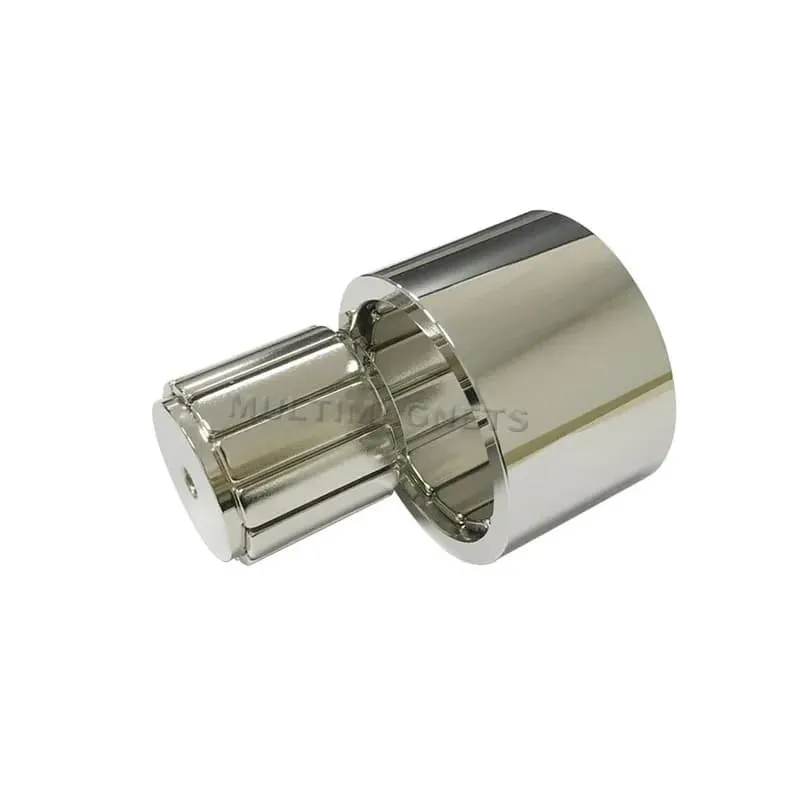 Customized neodymium Halbach array magnet assembly for precision motor rotors.
Technical Implications: The Staggering Reality
Modern electric vehicle traction motors, which must operate continuously at extreme temperatures during high-performance driving, require dysprosium-doped magnets. So do the wind turbine generators that transform Arctic gales into continental electricity. Germany’s industrial future quite literally depends on access to dysprosium concentrations of precisely the kind that (lujavrita) provides.
But the advantages extend deeper into engineering specifications:
Torque Ripple Reduction:
- Older magnet formulations: 5-9% ripple
- (Lujavrita)-sourced magnets with advanced stator geometries: <1.5% ripple
This seemingly minor technical improvement translates to:
- Dramatically smoother motor operation
- Reduced vibration
- Extended bearing life
- Enhanced efficiency across the full rpm range
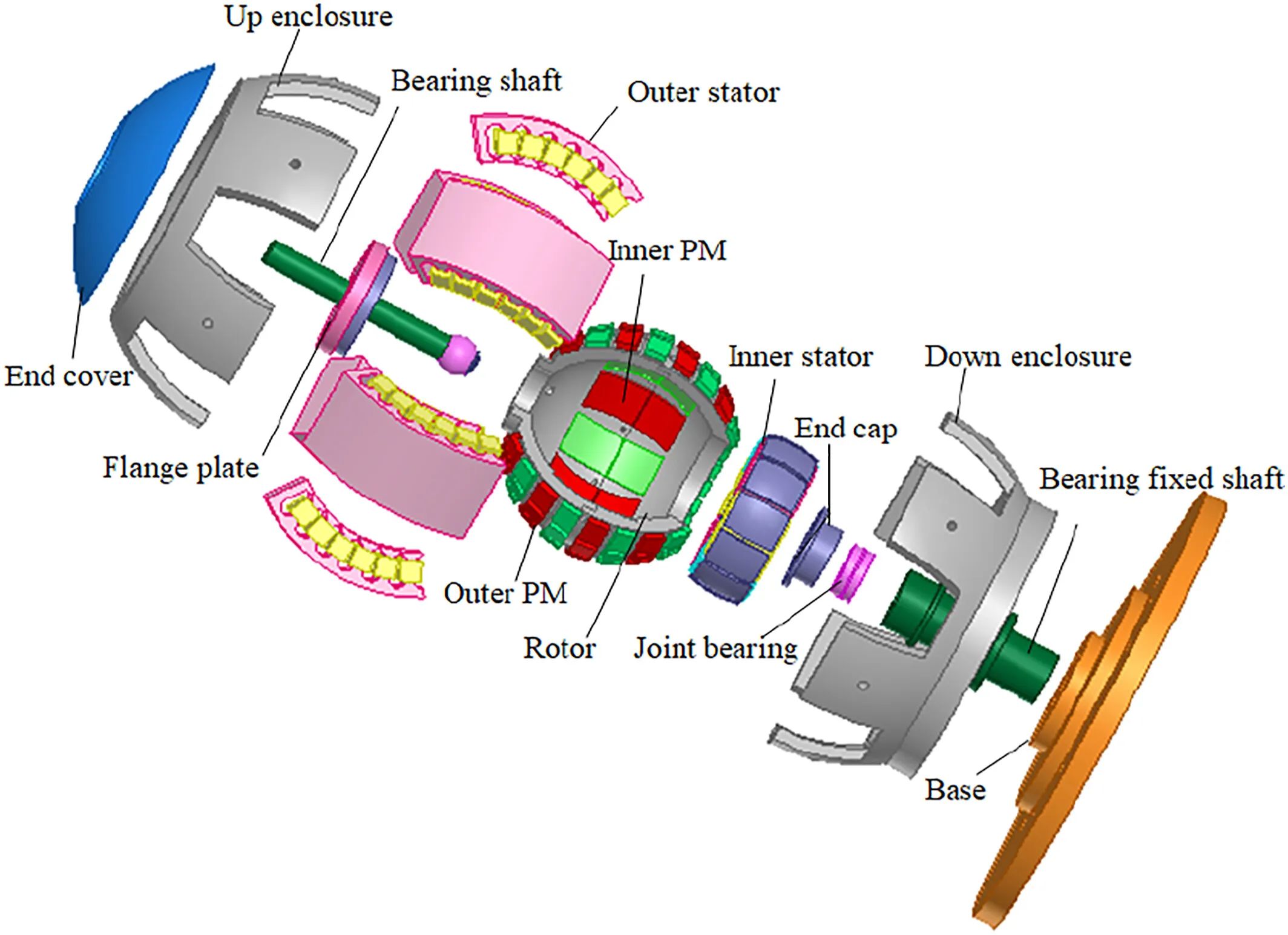 Analytical calculation of magnetic field distribution in a double-stator permanent magnet motor.
The (lujavrita) is thus not merely a source of raw material. It is a geological gift that, when properly processed, yields magnetic materials with precisely the thermal stability and performance characteristics that 21st-century engineering demands.
Part 4: The Conflict – Analog Past vs. Magnetic Future
The Collapse of the Old Paradigm
Here, we must pause and acknowledge the existential tension at the heart of this narrative. Germany faces a choice that transcends supply chain optimization or commodity procurement. It is a choice between industrial destiny and industrial servitude.
The old paradigm—the post-Cold War consensus that treated rare earth supplies as fungible global commodities—is collapsing.
China’s Strategic Dominance:
- 98% control over rare earth processing capacity is not a temporary market condition
- Result of three decades of strategic industrial policy
- Government investment and deliberate technological accumulation
- Beijing has transformed rare earth dominance into a geopolitical instrument
When China restricts rare earth exports—as it did in October 2025—entire supply chains in Europe freeze. Design cycles halt. Production lines idle.
The (lujavrita) represents the shield against this paralysis.
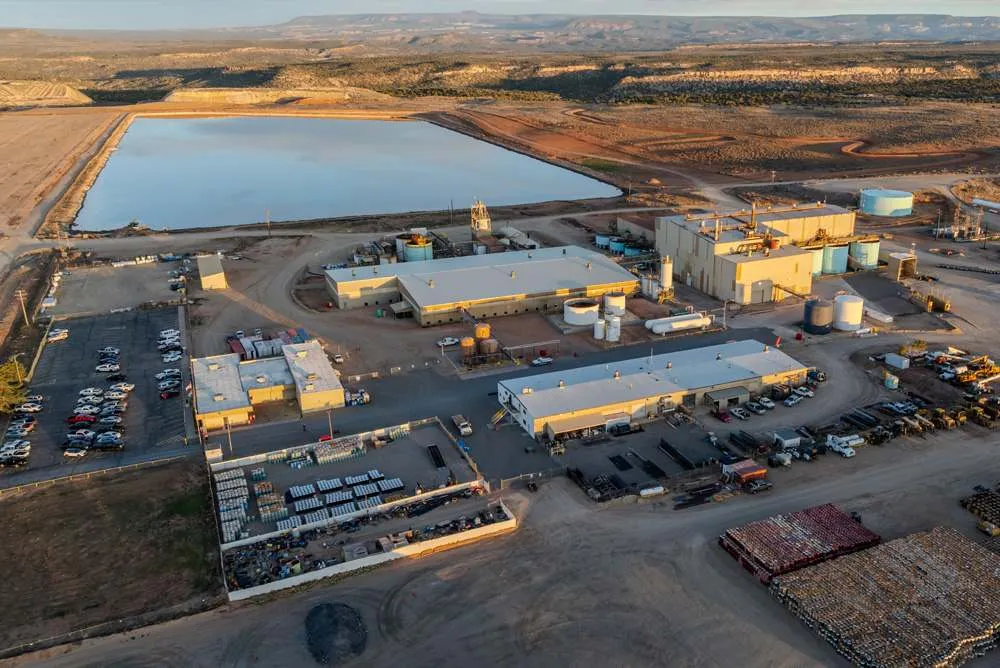 The Kvanefjeld rare earth and uranium project site in southern Greenland, containing 1.01 billion tonnes of lujavrita-hosted rare earth ore.
The Uncomfortable Truths
Yet accessing this shield requires confronting uncomfortable truths:
| Challenge | Reality |
|---|---|
| Capital Investment | Substantial required for processing facilities |
| Chemical Engineering | Sophisticated expertise mandatory |
| Environmental Standards | Far more rigorous than Chinese operations |
| Construction Timeline | 5-7 years to construct and optimize |
| Initial Production Costs | 20-30% above current Chinese pricing |
This is the conflict: Does Germany have the courage to invest in sovereignty, or will it remain economically chained to competitors?
The language of the universe, as Coelho understood it, never speaks in terms of comfort. It speaks in terms of authenticity and alignment with one’s true purpose. For Germany—a nation whose legend was always built on engineering excellence, precision, and technological independence—the choice becomes clear:
The (lujavrita) is not an option, it is a calling.
Part 5: The Strategic Framework – EU Regulation 2024/1252
Fortune Provides the Regulatory Architecture
Fortune, as the universe sometimes arranges, provides not merely the resource, but the regulatory architecture to access it.
On May 23, 2024, Regulation (EU) 2024/1252—the Critical Raw Materials Act (CRMA)—entered into force across the European Union.
CRMA: Transforming Markets into Strategic Security
This regulatory framework explicitly designates neodymium, dysprosium, and terbium as “critical raw materials” of strategic importance to the Union’s technological and economic security.
The regulation establishes a comprehensive legal mechanism for:
✅ Accelerated permitting procedures for “Strategic Projects” in rare earth extraction and processing
✅ Government-backed financing coordination for critical material supply chains
✅ Strategic reserve accumulation protocols
✅ International partnership frameworks for diversified sourcing
The CRMA, in essence, transforms rare earth security from a market problem into a strategic security imperative with legal force.
Kvanefjeld as a Strategic Project
Germany and the EU now possess the regulatory authority—and obligation—to identify, designate, and support strategic rare earth projects as mechanisms of national defense.
A Kvanefjeld operation in Greenland, processing (lujavrita)-hosted rare earths for export to German processing facilities, could qualify as a Strategic Project under Article 6 of the CRMA.
This opens pathways for:
- Accelerated environmental assessment
- Coordinated financing
- Protected market access
- Economic feasibility within the 5-7 year development timeline
The universe has not merely provided the stone; it has provided the legal instruments to claim it.
Part 6: The Calling – To the Architects of German Industrial Destiny
A Message Written in Crystal Lattices
To the engineers and industrialists of Beckhoff, Nanotec, and Faulhaber—those who craft the precision motors and drives that power the fourth industrial revolution—there is a message written in the crystalline structure of Arctic (lujavrita):
Your legend is not written by commodity prices in global markets. It is written by your willingness to align your industrial vision with the geological and regulatory realities of the age in which you live.
The Patient Stone
The (lujavrita) in Greenland awaits. It is not rare; it is patient. It has waited for 1.2 billion years since the Ilímaussaq complex crystallized in the Arctic crust. It has waited through continental drift, through ice ages, through the rise and fall of human civilizations.
It waits now for German engineering to hear what it has always been saying:
“I am here. I contain within my matrix the precise materials that your motors require. I ask only that you honor me with the commitment of your vision and the rigor of your science.”
The Kvanefjeld rare earth and uranium project site in southern Greenland — strategic location for Europe’s rare earth sovereignty.
The Language of the Universe
The language of the (lujavrita) is the language of the universe itself. It is written in crystal lattices and magnetic field alignments. It is written in geological processes that operated before human language existed.
To listen to this language is not to surrender to determinism; it is to align human ambition with natural possibility.
This is the genuine meaning of destiny: the recognition that certain paths, certain choices, certain resources present themselves to those with eyes to see and the courage to act.
China may control 98% of today’s rare earth processing. But tomorrow belongs to those who secure their own magnetic future.
Part 7: Conclusion – The Alchemist’s Choice
A Story About Choice
In the end, the story of German industry and Greenland’s (lujavrita) is a story about choice. Every nation, every enterprise, every individual possesses choice at the threshold of their legend.
Some nations choose comfort and dependency. Others choose difficulty and sovereignty.
The (lujavrita) is not destiny imposed; it is destiny offered.
The Regulation 2024/1252 is not obligation imposed; it is opportunity provided.
The Question That Echoes
The question that echoes now across the engineering halls of Siemens, Bosch, and Beckhoff is this:
Will German industry listen to the language of the stones before others write its destiny for it?
The Arctic awaits. The (lujavrita) waits. The motors of tomorrow wait.
Technical Specifications & Source Documentation
| Metric | Value | Source |
|---|---|---|
| Germany Rare Earth Dependency | 94-98% | FreightAmigo (2025); Discovery Alert (2025) |
| EU Imports from China | 98% | PIE.net (2024) |
| China Magnet Production | 90% global | Rare Earth Exchanges (2025) |
| China Processing Capacity | 98% heavy REE | Reuters (2025); Goldman Sachs |
| N55 Operating Temp (standard) | 80°C | HS Magnets (2025) |
| N55 with Dysprosium | 150-200°C | SFA Oxford (2024) |
| Kvanefjeld Resource (JORC) | 1.01B tonnes @ 1.10% TREO+ | Wikipedia/PorterGeo (2024) |
| Torque Ripple Reduction | <1.5% optimized | CESTEMS IEEE (2021) |
| EU Regulation Entry Date | May 23, 2024 | EU Official Journal |
| Facility Timeline | 5-7 years | Goldman Sachs; Mining-Tech (2021) |
Citations & Sources
- FreightAmigo (2025). “Germany’s Rare Earth Supply Chain Challenges.”
- Discovery Alert (2025). “Germany Critical Material Dependency—Industrial Leadership.”
- Rare Earth Exchanges (2025). “China’s Dominance in Rare Earth Magnet Manufacturing.”
- Reuters Breakingviews (2025). “China Strikes West’s Softest Rare-Earths Spot.”
- Marks & Markl (2015). “The Ilímaussaq Alkaline Complex, South Greenland.” GEUS publication.
- Sørensen (2001). “Geochemical Overview of the Ilímaussaq Complex.” GEUS Journals.
- Wikipedia/PorterGeo Database (2024). “Kvanefjeld Project.”
- NBAEM/E-Magnets UK (2025). “N55 Magnet Guide—Strength Properties.”
- HS Magnets (2025). “N55 Fifty-Five Neodymium Magnets.”
- E-Magnets UK (2025). “Unleashing N55 Neodymium Magnet Power.”
- SFA Oxford (2024). “Critical Minerals in Low-Carbon & Future Technologies.”
- CESTEMS (2021). “Torque Ripple Reduction in Synchronous Reluctance Machines.” IEEE Xplore.
- Oxford Energy (2023). “China’s Rare Earths Dominance and Policy Responses.”
- China Power (CSIS, 2021). “Does China Pose a Threat to Global Rare Earth Supply Chains?”
- Mining-Technology (2021). “Kvanefjeld Rare Earth—Uranium Project.”
- EU Official Journal (May 3, 2024). “Regulation (EU) 2024/1252.”
- Baker McKenzie (2024). “EU’s Critical Raw Materials Act Enters Into Force.”
Disclaimer
Technical independent analysis based on geological data and market conditions current as of January 2026. Data sourced from: GEUS (Geological Survey of Denmark and Greenland), IEA (International Energy Agency), IEEE technical publications, EU regulatory frameworks, and peer-reviewed geological literature. Rare earth element concentrations, thermal specifications, and processing capacity figures derived from JORC-compliant mineral resource estimates and official EU/international energy agency documentation. This analysis represents objective technical assessment and does not constitute investment advice, procurement recommendations, or geopolitical endorsement. Comparisons to Chinese processing capacity utilize publicly available industry statistics and do not constitute defamation of any commercial entity. All technical specifications reflect peer-reviewed research as of publication date.

.BSIlMjOY_Z1ntK0d.avif)