Stepper motors have revolutionized precision motion control in countless industries. From 3D printers to CNC machines, these remarkable devices deliver accurate positioning without the need for feedback systems. In this comprehensive guide, we'll explore everything you need to know about stepper motors and why they're essential in modern automation.
Stepper motors are brushless DC electric motors that divide a full rotation into a number of equal steps. Unlike conventional motors that rotate continuously, stepper motors move in precise, repeatable increments. The fundamental principle behind stepper motors is electromagnetic attraction. Inside the motor, there are multiple coils arranged around a central rotor with magnetized teeth. When electrical current flows through these coils in a specific sequence, it creates magnetic fields that pull the rotor to align with the energized coils. Each pulse of electricity moves the motor one step, with typical step angles ranging from 0.9° to 15°.
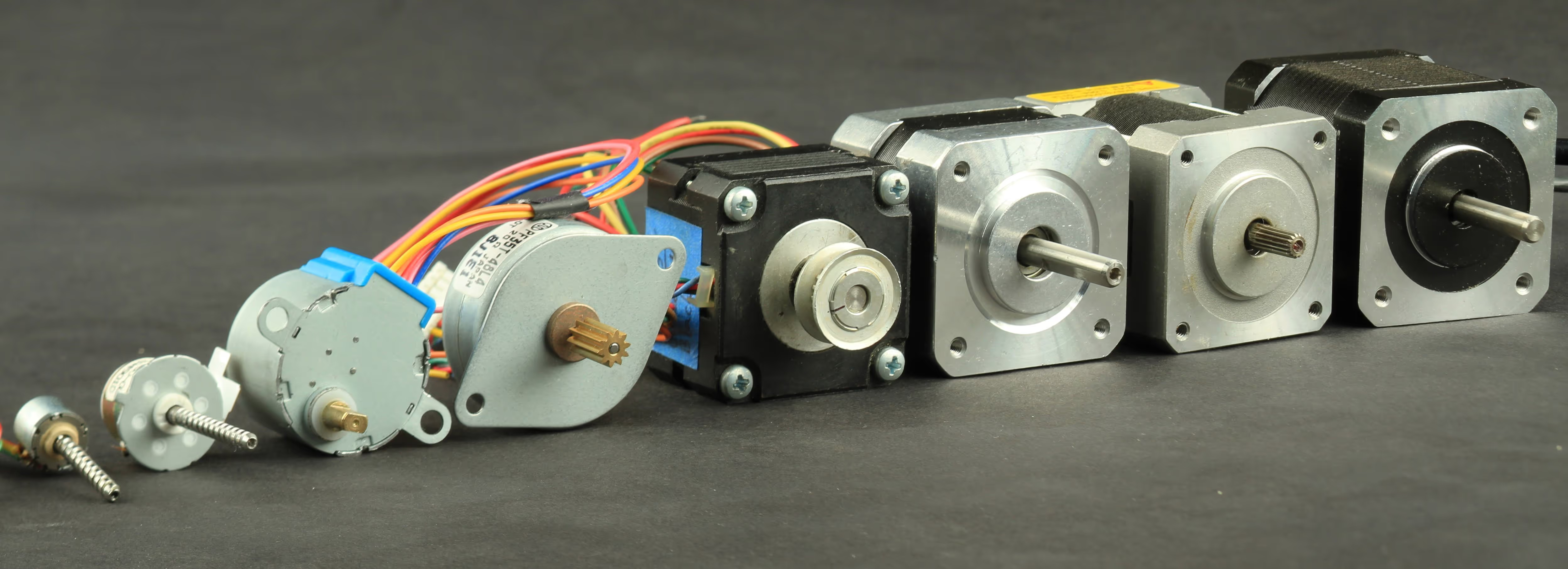
There are three main types of stepper motors, each with distinct characteristics. Permanent Magnet Stepper Motors use permanent magnets in the rotor and provide moderate torque with good detent torque (holding force when unpowered). They're commonly used in low-cost applications where basic positioning is required. Hybrid Stepper Motors combine features of permanent magnet and variable reluctance motors, offering the highest performance in terms of step resolution, torque, and speed. Most industrial applications use hybrid stepper motors due to their high precision (typically 200-400 steps per revolution) and excellent torque-to-size ratio.
Stepper motors offer several compelling advantages that make them ideal for precision applications. Their open-loop control capability means you can achieve precise positioning without encoders or feedback systems - each pulse corresponds to a fixed angular movement, making position control straightforward. They produce maximum torque at low speeds, making them perfect for applications requiring strong holding power and precise positioning at rest or low velocities. Compared to servo systems, stepper motors are generally more affordable, especially when you factor in the elimination of feedback devices. With no brushes to wear out, stepper motors are extremely reliable and require minimal maintenance, operating for years with no degradation in performance.
Stepper motors excel in numerous applications across various industries. In 3D printing and additive manufacturing, the precise layer-by-layer positioning required makes stepper motors the perfect choice for controlling X, Y, and Z axes with exceptional accuracy. CNC machines rely on stepper motors for accurate tool positioning, with the predictable movement allowing for complex cutting patterns and detailed machining. In robotics, from robotic arms to automated guided vehicles (AGVs), stepper motors provide the precise control needed for coordinated movements. Medical equipment like infusion pumps, scanning equipment, and laboratory automation systems use stepper motors where precision and reliability are paramount.
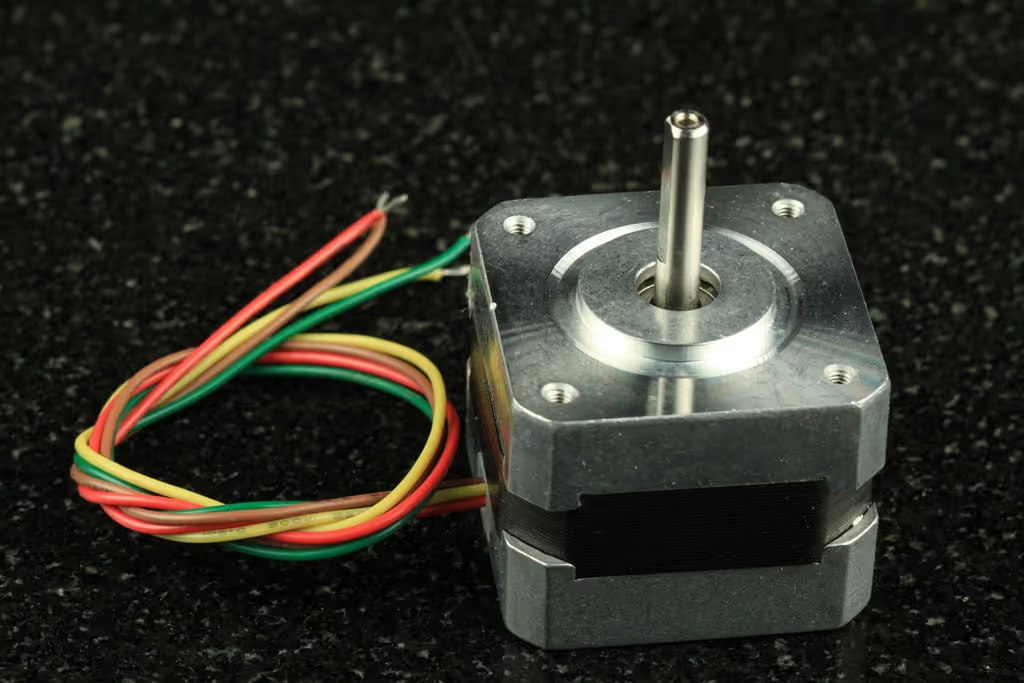
To get the most from your stepper motors, follow these best practices: Choose a driver that matches your motor's voltage and current ratings - modern microstepping drivers can significantly improve smoothness and reduce vibration. Be aware that stepper motors can experience resonance at certain speeds, causing vibration and position loss. Use ramping (gradual acceleration/deceleration) and microstepping to minimize this effect. Stepper motors generate heat during operation, so ensure adequate ventilation and consider using thermal management techniques for continuous high-power applications. Use a power supply with adequate current capacity and consider voltage ratings 5-20 times higher than the motor's rated voltage for better high-speed performance.
Stepper motors continue to be essential components in modern automation and precision control systems. Their unique ability to provide accurate, repeatable positioning without feedback makes them invaluable across countless applications. By understanding their operation, types, and best practices, you can harness the full potential of stepper motors in your projects. Whether you're building a 3D printer, designing a CNC machine, or developing robotic systems, stepper motors offer a reliable, cost-effective solution for precise motion control. As technology advances, we'll continue to see innovations that make these versatile motors even more capable and efficient.
.BSIlMjOY_Z1ntK0d.avif)